
Stamped · Exposed Aggregate · Coloured
Decorative Concrete
It's still concrete underneath — same base mix, same strength, same lifespan as anything else we pour. What changes is what happens to it during and after the pour: color worked in, a pattern pressed into the surface, or the top layer treated to expose the stone underneath.
We're Niagara North Contracting, based in Grimsby, pouring concrete across this area since 1987. Below is everything we tell homeowners when they're trying to figure out which decorative finish actually makes sense for their driveway, patio, or walkway — not just the sales pitch version.
Client Reviews
Hear What Your Neighbours Say About Our Decorative Concrete Services
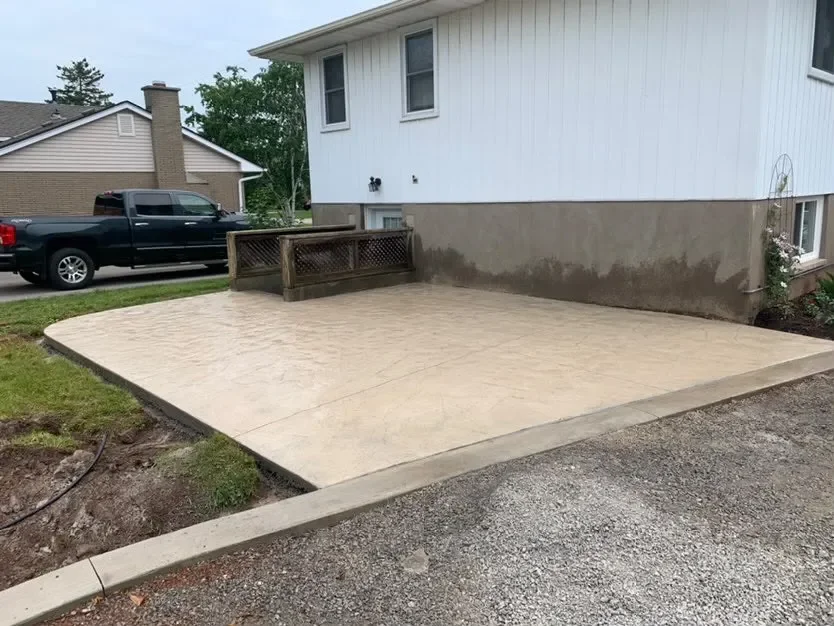
I had a little pad that needed to be poured (8.5' x 7') and I was having trouble finding someone to take on the job. The few places I contacted before Niagara North didn't seem interested at all or didn't even have the courtesy to get back to me. Even though Niagara North is more set up for large scale jobs, Jerrad made me feel like my job was still as important as the big ones. He worked around my schedule and was very reasonably priced. Communication was impeccable and the finished product was amazing. I have already referred Niagara North to a handful of people and will be using them again for future concrete jobs I have planned.
Chris Kovach
I cannot say enough about the work and professionalism of Jerrad and his entire team. They were extremely efficient and honest in their planning and suggestions for our patio. They were punctual, kept us informed throughout and did an exceptional job. We would highly recommend them and use their services again without hesitation.
Justin Dumont
Definition
What Decorative Concrete Actually Is
Decorative concrete is not a different material from the concrete used for a plain driveway or garage floor — same Portland cement, aggregate, and water, poured by the same trucks, cured the same way. The decorative part happens in the finishing: color mixed in or applied to the surface, a pattern stamped in while it's still workable, or the top layer washed off to expose the stone mixed through it.
Because the structural mix doesn't change, decorative concrete holds up the same as plain concrete does — it's the visual side that's different, not the durability.
Reasons
Why Homeowners Choose Decorative Concrete
A few reasons this comes up in almost every driveway or patio quote we do:
- Cost versus natural stone or brick. You get a similar look without paying to quarry, cut, and individually place real stone.
- No joints to fight. A poured slab doesn't have the gaps between individual units that pavers and stone do, so there's less for weeds, ants, and shifting to take hold of over time.
- It lasts. A properly built slab commonly goes 25 to 40 years before major work is needed, decorative or not.
- There's an actual range of looks available, from a stone-look stamped patio to a simple colored driveway that just ties into the brick on the house.
It's not the right call in every situation — more on the tradeoffs further down — but those are the reasons it comes up as often as it does.
Finishes
The Decorative Concrete Finishes
Stamped Concrete
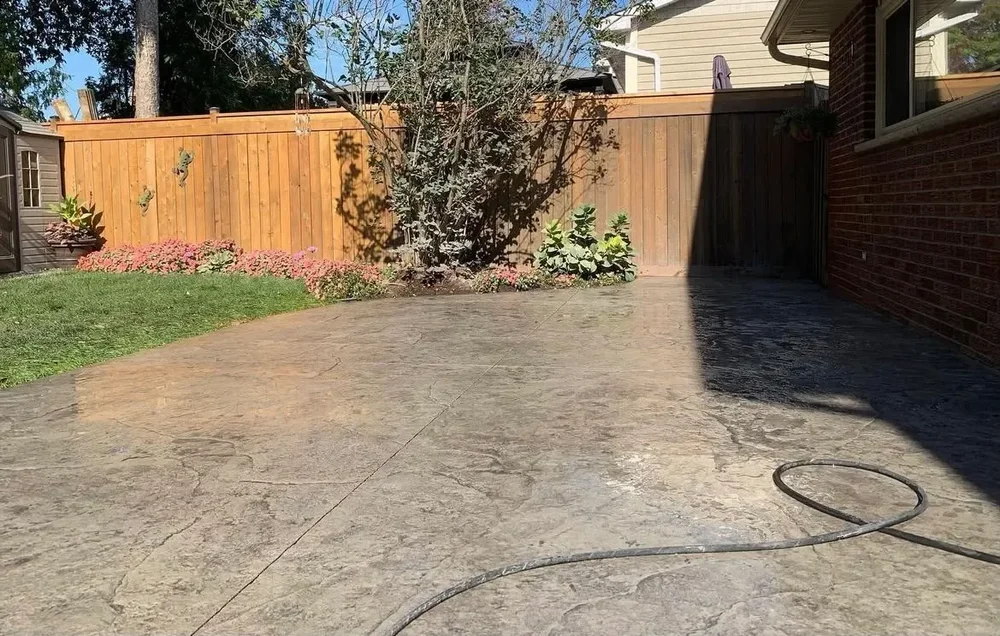
Stamped concrete gets a pattern pressed into it while it's still wet — flagstone, ashlar slate, cobblestone, running bond brick, wood plank, whatever fits the house. You're not paying for the material here, you're paying for labour and timing. There's a narrow window between the pour and the concrete setting up where the crew has to get every stamp placed clean, which is why this finish needs more hands on-site than a broom finish does and costs more as a result.
It works best on driveways and front walkways where the goal is something that reads as real stone or pavers without the price tag or the weeds coming up between joints. One thing we build into every stamped quote by default: a slip-resistant additive in the sealer. Stamped surfaces can get slick when wet otherwise, and we don't leave that out just to shave the number down.
Exposed Aggregate Concrete
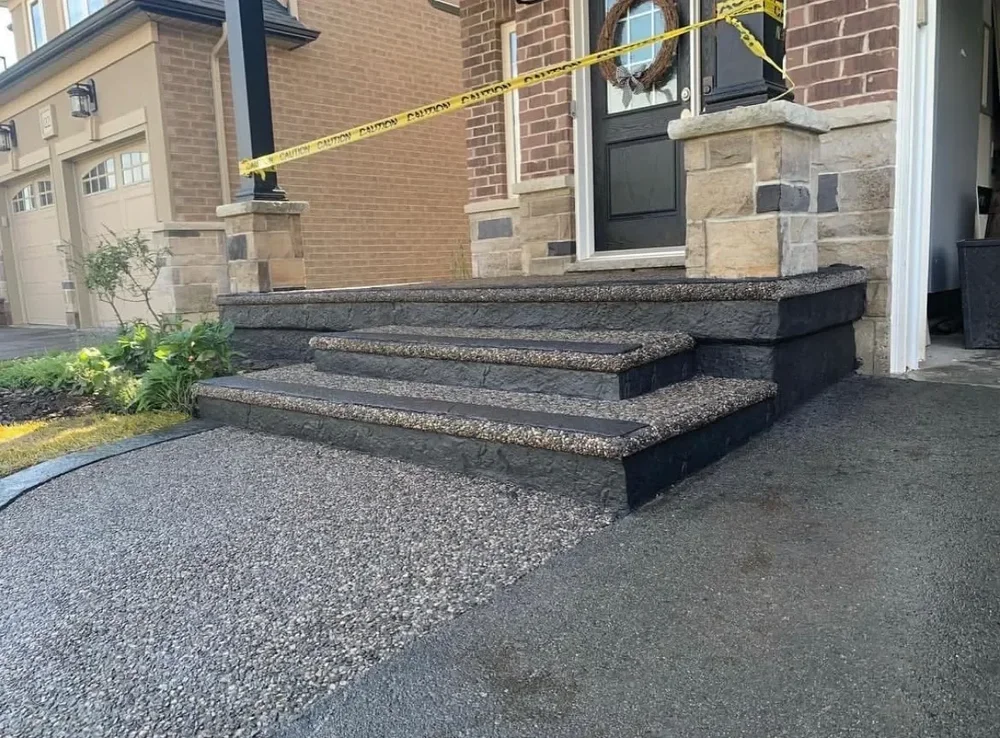
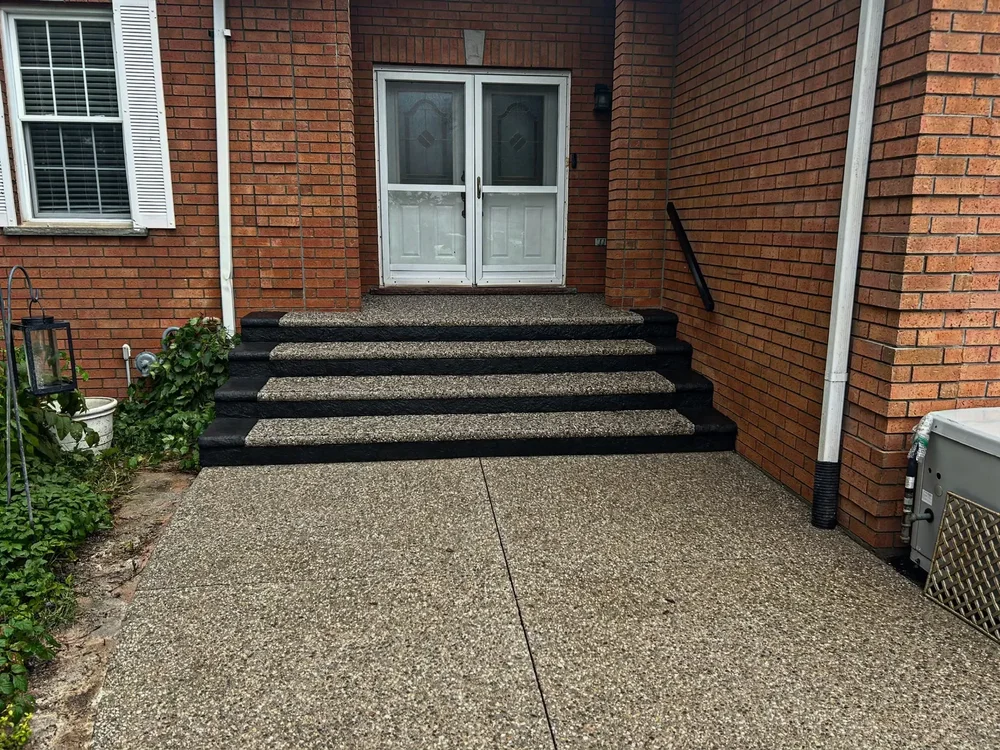
This is the workhorse finish for winters here. Instead of a smooth or stamped top, the surface layer of cement paste gets washed or brushed off shortly after the pour, which exposes the stone aggregate mixed through the concrete — river rock, granite chip, whatever mix you go with. What's left is a naturally pitted, gritty surface.
That texture is why we push exposed aggregate hard for driveways specifically. It grips noticeably better than a smooth or stamped finish under snow, ice melt, and studded tires, and it holds up well to plow blades scraping across it every winter. It's also usually the cheaper of the two decorative options, since there's less detail-heavy labour involved than stamping.
Coloured & Integral-Colour Concrete
Colour gets added one of two ways. Integral colour is mixed right into the concrete before the pour, so it runs consistently through the full depth of the slab and gives a more muted, uniform tone. A colour hardener is a dry pigment broadcast onto the surface during finishing — it produces a richer, more saturated look and adds some surface hardness, which is why hardeners often get paired with stamped patterns.
Colour is usually the easiest way to tie a new driveway or patio into brick, siding, or stone that's already on the house, without committing to a full stamped pattern. It does fade some with direct UV exposure over the years; a light seal coat every couple of years slows that down considerably.
Other Techniques You'll See Out There
Decorative concrete also covers polished interior floors, acid-stained or dyed surfaces, engraved or scored patterns cut into cured concrete, and thin overlays applied over existing slabs. We don't do interior polishing here — our decorative work is exterior: driveways, patios, walkways, and entryways — but it's worth knowing those other techniques exist if you're weighing options for something like a basement floor.
Applications
Where Decorative Concrete Gets Used
Most of the decorative concrete work we do falls into a few categories:
- Driveways — exposed aggregate is the most common request here for the traction reason above; stamped and coloured driveways happen too, especially on lower-traffic or side driveways
- Front walkways and entries — usually stamped or coloured to match the house
- Back patios — any of the three, depending on the look you're going for
- Steps and porch landings tied into a driveway or walkway pour
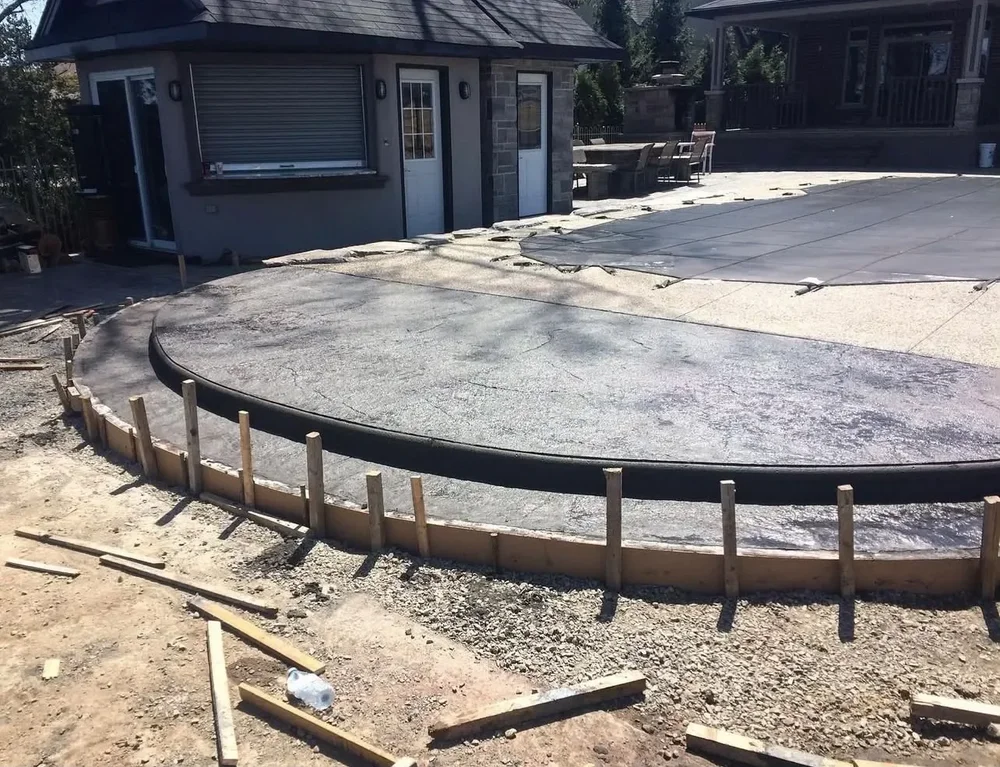
If you're specifically after a pool deck, that's its own thing with its own drainage, coping, and slip-resistance requirements — we've got a dedicated pool deck page that covers that in more detail.
Comparison
Decorative Concrete vs. Pavers vs. Natural Stone
This is the comparison that comes up most in quotes, so here's the honest rundown:
| Decorative Concrete | Pavers | Natural Stone | |
|---|---|---|---|
| Upfront cost | Moderate | Moderate to high | High |
| Installation time | Faster (single pour) | Slower (individual placement) | Slower, more labour-intensive |
| Repair approach | Full or partial replacement/patching | Individual units can be swapped | Individual units can sometimes be reset |
| Weed/settling risk | Low (few joints) | Higher (joints between units) | Moderate, depends on setting method |
| Typical lifespan | 25–40+ years | 20–30+ years, individual units replaceable | Very long, but joints/settling need occasional attention |
Pavers win on repairability — a damaged paver can be pulled and swapped without touching the rest of the surface, while a crack in a poured slab is tougher to hide seamlessly, especially once colour or a stamped pattern has weathered in. Concrete generally wins on speed and upfront cost, plus the 'no gaps' factor that cuts down on weeds and shifting.
Pricing
Decorative Concrete Pricing Levels
Pricing depends on a handful of things we walk through during every quote:
- Which finish you pick. Broom and exposed aggregate are the least expensive decorative options. Stamped work costs more because of the extra labour and timing.
- Site prep. Poor drainage, soil that needs excavating and replacing, or a hard-to-access site all add cost before concrete even gets poured.
- Colour and pattern complexity. A single integral colour with a simple broom finish costs less than multi-colour stamped work with hand-applied accents.
- Sealing. A slip-resistant additive for a driveway or pool-adjacent patio adds a bit to the base cost, but it's not something we'd skip to hit a lower number.
As a rough point of reference, decorative finishes usually land as a moderate step up from plain broom-finished concrete, and still typically come in under natural stone or higher-end pavers for a comparable area.
Local conditions
Why the Decorative Concrete Finish Matters More Here Than Elsewhere
Grimsby clay and the freeze-thaw cycles off the escarpment aren't gentle on concrete poured wrong. Air-entrained mix, proper base compaction, and correctly placed control joints matter more here than they would somewhere with a milder winter — and that part is the same no matter which decorative finish you choose. The finish is what you see. The base and mix design are what determine whether you're looking at cracking and heaving in five winters or not.
Process
Our Decorative Concrete Installation Process
- Site visit — we look at drainage, existing grade, and what you're trying to match before quoting anything
- Forming and base prep — the part nobody sees, and the part that actually determines how the slab holds up
- Pour day — timing matters more for stamped work than for broom or exposed aggregate
- Finishing — stamping, washing/brushing for aggregate, or colour application, depending on what you picked
- Cure and seal — we walk you through when it's safe for foot traffic, vehicles, and furniture based on conditions the day of the pour
Care
Keeping It Looking Good
Decorative concrete is low-maintenance, not zero-maintenance. Resealing every two to three years protects colour from fading and helps prevent staining from oil or de-icing salt. If you're salting in winter, calcium chloride-based products are easier on sealed decorative surfaces than plain rock salt. Beyond that, a periodic rinse or light pressure wash handles most dirt and algae buildup, especially in shaded spots.
Service area
Where We Install Decorative Concrete
Grimsby's home base, but we're out pouring driveways and patios across the whole Niagara Region and into Hamilton regularly — Beamsville, Vineland, Jordan, Smithville, Stoney Creek, St. Catharines, and the surrounding areas. If you're not sure whether you're in range, just call.
FAQ
FAQ About Decorative Concrete
What's the actual difference between stamped and exposed aggregate concrete?
Stamped has a pattern pressed into the surface to mimic stone, brick, or wood. Exposed aggregate has the top layer washed off to expose the stone mixed into the concrete itself. Stamped is more about the look; exposed aggregate is more about traction and texture, which is why it's so common on driveways here.
Does decorative concrete cost more than plain grey concrete?
Yes, and the gap depends on the finish. Exposed aggregate is usually the smallest step up from plain concrete. Stamped costs more because of the extra labour and timing involved. Colour falls somewhere in between depending on whether it's integral or a hardener.
Is decorative concrete the same strength as regular concrete?
Yes. The decorative treatment changes colour and surface texture, not the underlying mix design or structural strength.
How long does a decorative concrete driveway actually last?
With proper base prep and a mix suited to our winters, 25-plus years isn't unusual before you're looking at major resurfacing. Sealing every few years extends that and keeps the colour or texture looking closer to day one.
Does coloured concrete fade?
Some, over time, mostly from direct UV exposure. Integral colour fades more evenly since it runs through the whole slab. Resealing every 2–3 years is the main thing that slows it down.
Is exposed aggregate slippery when wet?
No — it's actually the opposite. The texture from the exposed stone is one of the reasons we recommend it for driveways specifically, since it holds traction better than a smooth or stamped surface under rain, snow, or ice.
How does decorative concrete compare to pavers?
Concrete generally installs faster and has fewer gaps for weeds or settling, since it's a single poured slab rather than individual units. Pavers have the edge on repairability, since a damaged paver can be swapped without touching the rest of the surface.
Do you offer free quotes?
Yes. Give us a call or send an email and we'll set up a site visit.
Next step
Get a Free Quote
Niagara North Contracting
398 Thirty Rd, Grimsby, ON L3M 0K9
Phone: 905-971-5397
Email:
NNCsales@outlook.com
Serving Grimsby, Beamsville, Vineland, Jordan, Smithville, Stoney Creek, Hamilton, St. Catharines, and the surrounding Niagara Region since 1987.